What I’ve learned from teaching over 250 parents how to braid
The three areas almost every parent struggles with when learning to braid — and why no one explains

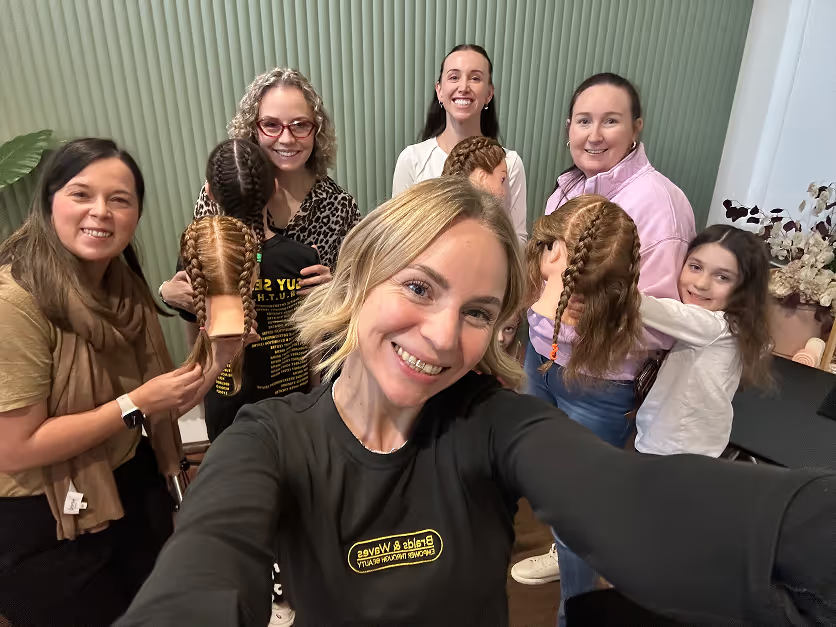
If you’ve ever felt like the only parent who “just can’t get braiding right” let me tell you something honest — you’re not. After teaching hundreds of mums and dads in my Braiding for Parents workshops every week for the past year, I’ve noticed the exact same stumbling blocks show up again and again.
Different families.
Different kids.
Different routines.
Same struggles.
And none of it is because you’re uncoordinated or bad with hair.
It’s simply because no one ever explained the tiny details that actually matter.
Here’s what I see every single class in my studio.
Parents struggle because tutorials skip the “real” skills
Most tutorials you find online jump straight into the braid itself.
“Take the left strand… move it under… now add hair…”
Meanwhile, you’re sitting there wondering why your braid looks nothing like the person’s on the screen.
It’s because the foundational skills — the ones that make or break a braid — aren’t being taught.
These are the three skills almost every parent struggles with:
Hand placement: no one teaches what your fingers should actually do
Hand placement is the first place most parents get stuck.
They’re crossing strands correctly, but their fingers aren’t positioned to support the braid.
I’ve seen parents:
- hold too much hair in one hand
- lose track of which strand is “middle”
- open their fingers too wide
- switch their grip mid-braid without realising
This is why the braid starts neat and then slowly falls apart. It’s not the technique — it’s the hand choreography.
Once parents learn where to place each finger, the whole braid tightens up instantly. You can actually feel the difference.
Tension: the braid loosens before you even know it
Tension is the thing everyone feels but no one explains.
Too loose, and the braid looks fluffy. Too tight, and your child wants to run away.
Finding the middle ground takes guidance.
At workshops, I often place a parent’s hands exactly where the tension should be and say, “Freeze — this is the feeling.” That tiny correction is usually the moment everything clicks.
A dad once said, “I’ve been pulling the wrong thing this whole time.”
He wasn’t wrong — he was just untrained.
Body positioning: the unspoken reason braids lift, bubble, or twist
This is the most overlooked piece of braiding technique.
If your body isn’t in the right place — especially around the nape — your braid will:
- lift
- bubble
- sit away from the scalp
- or drift off-centre
Parents are always surprised when I tell them, “Move your body and move the braid the way you want it, because you lead it.”
Once they align themselves with the section they’re working on, the braid settles neatly and tension becomes consistent.
It’s one of those small changes that quietly fixes everything.
Why I’ve built an online course for parents
After teaching so many parents in person, I realised the same thing over and over:
“Everyone could learn this… if someone actually showed them properly.”
Not rushed.
Not confusing.
Not assuming you already know the jargon.
Just slow, simple, step-by-step teaching you can follow at home, at your pace.
Exactly the way I teach in the studio — but accessible anywhere.
This course brings together everything I’ve learned from watching hundreds of parents make the same mistakes, ask the same questions, and experience the same breakthroughs.
And honestly? I want more mums and dads to have that feeling — the moment they finish a braid and go,
“Oh! I can actually do this.”
Get the guidance that makes braiding easier
Learning to braid shouldn’t feel overwhelming. With the right explanations and simple, beginner-friendly technique, you can braid confidently at home. My Braids & Waves Community breaks everything down clearly so you finally understand what your hands should be doing.
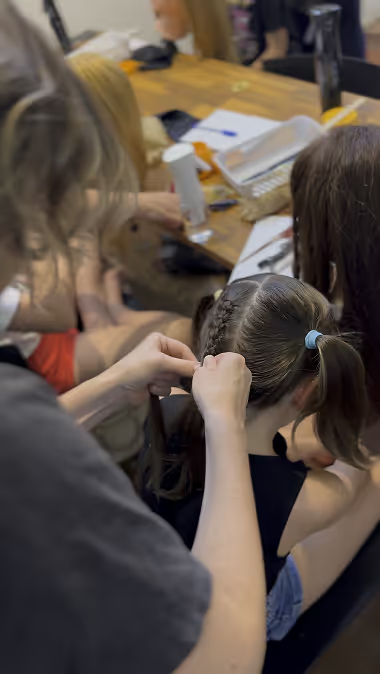
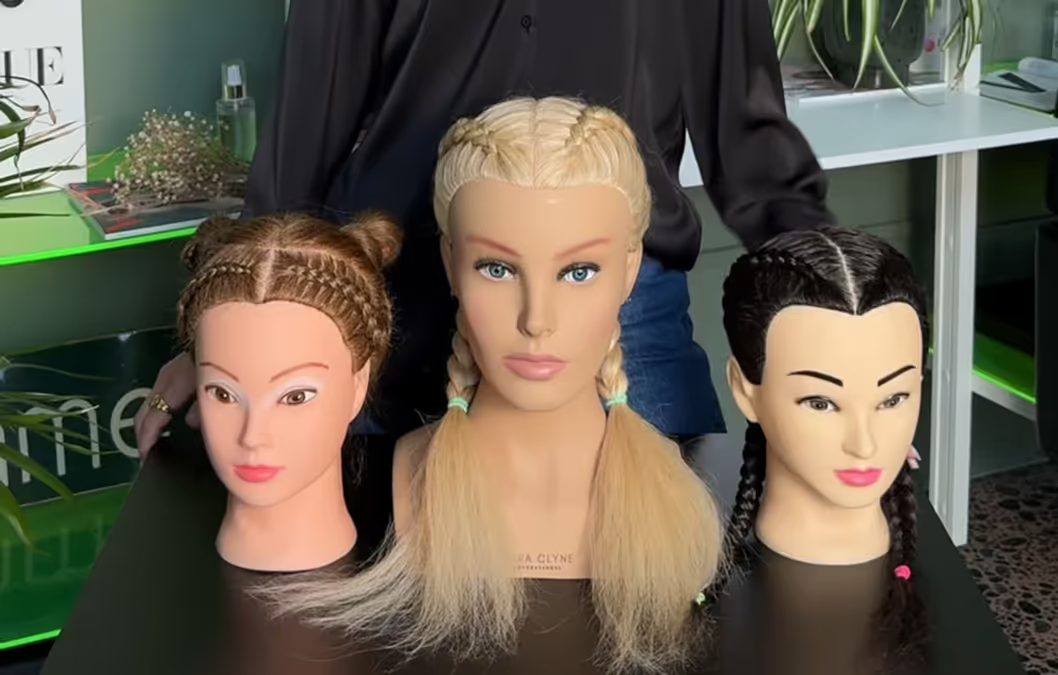
What we do
From world-class braiding services to workshops and online courses that build confidence.