How to learn braiding as a parent (what actually works and what doesn’t)
Four ways parents can learn to braid with honest pros, cons, and what most miss.

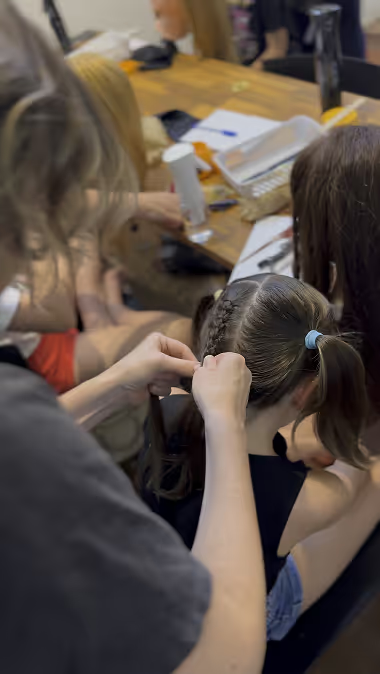
If you’re a parent who wants to braid your child’s hair but doesn’t know where to start, you’re not alone. Most parents don’t struggle because they lack patience or care — they struggle because they’re learning from systems that weren’t designed for beginners.
Over time, teaching hundreds of mums and dads, I’ve seen parents try every possible way to learn braiding. Some methods help a little. Some create more confusion. And some almost work… but leave big gaps.
Let’s walk through the most common ways parents try to learn braiding — honestly, without judgement — so you can decide what actually suits you.
Learning from YouTube tutorials
YouTube is usually where parents start. It’s easy, free, and feels low-pressure. You can watch at night after the kids are asleep, pause the video, rewind, and try again.
And at first, it feels promising.
But here’s what I see over and over again in workshops: parents who have watched dozens of tutorials and still don’t understand why their braids don’t look right.
That’s because most YouTube tutorials are made by experienced braiders, not teachers. The person filming already knows what their hands are doing, so they skip over the parts beginners actually need explained.
Pros
- Easy and free to access
- Visual demonstrations
- Can pause, rewind, and practise in your own time
Cons
- Hand placement is rarely explained
- Tension is shown, not taught
- Body positioning is often skipped
- No guidance on what to do when the braid starts going wrong
Parents tell me they pause videos ten times, copy every movement, and still end up with a loose or messy braid. That’s not because they didn’t try hard enough - it’s because copying without understanding only gets you so far.
Learning from a friend or family member who “can braid”
Another common approach is asking a friend, sister, or another parent who seems good at braiding. This can feel reassuring because it’s personal and informal.
Sometimes it helps a bit.
But most people who can braid do it on instinct. They’ve never had to break it down step by step or explain why they do what they do. So their teaching usually sounds like:
“Just cross it under like this.”
“Hold it tighter.”
“You’ll get the feel eventually.”
Pros
- Personal and informal
- You can ask questions in real time
- Feels supportive
Cons
- No structured method
- Instructions are often vague
- Hard to explain what your hands should actually be doing
The problem is, none of that tells you how to improve.
I’ve seen parents come to my workshops more confused after being shown by a friend, because they were trying to copy someone else’s hands without understanding their own. Good braiders aren’t automatically good teachers, and without structure, progress stays inconsistent.
Learning through trial and error on your child
Some parents jump straight in and practise directly on their child’s hair, hoping repetition will eventually make things click.
And yes, with enough time, some improvement usually happens.
But this method comes with a big downside: it’s uncomfortable and frustrating for kids, especially while you’re still learning. When you’re worried about pulling or hurting them, you subconsciously change how you braid.
Pros
- Hands-on practice
- Some progress over time
Cons
- Stressful for both parent and child
- Inconsistent tension
- Parents rush or avoid fixing mistakes
- Kids often start to dislike hair time
Parents tend to loosen tension to avoid discomfort, rush through tricky sections, or stop practising altogether because hair time becomes stressful.
I hear this all the time:
“They won’t sit still anymore.”
“They hate having their hair done now.”
That’s not because braiding is bad - it’s because the learning phase wasn’t supported properly.
Learning through a structured course designed for parents
This is where the biggest shift happens.
A structured course designed specifically for parents doesn’t assume prior knowledge. It explains the things other methods skip and builds skill in the right order.
Instead of guessing, parents learn exactly how to place their fingers, how to control tension without pulling, how to position their body as the braid moves, how to fix mistakes mid-braid, and how to practise without causing discomfort.
Pros
- Step-by-step guidance
- Designed specifically for beginners
- Builds confidence through understanding
- Clear explanations of technique, not just movements
Cons
- Requires intention and practice
- Not instant — skills still take time to build
What I see with parents who learn this way is confidence. Not perfect braids overnight, but calm, steady progress and the ability to understand why something works or doesn’t.
They stop copying and start braiding with intention.
A side-by-side comparison
| Learning method | What works | Where it falls short |
|---|---|---|
| YouTube tutorials | Easy access, visual | No structure, skips fundamentals |
| Learning from a friend | Personal, informal | Hard to explain technique |
| Trial and error on your child | Hands-on | Stressful, uncomfortable |
| Structured parent course | Clear steps, confidence | Requires commitment |
The honest takeaway
There’s nothing wrong with starting on YouTube or asking a friend. Most parents do. But if you’ve tried those options and still feel unsure, it’s not because you’re incapable - it’s because those methods weren’t built to teach you properly.
Braiding doesn’t have to feel chaotic or stressful. With the right explanations and structure, it becomes predictable, calm, and even enjoyable.
And that’s when parents usually say,
“Oh… now I get it.”
Make braiding feel clear and doable
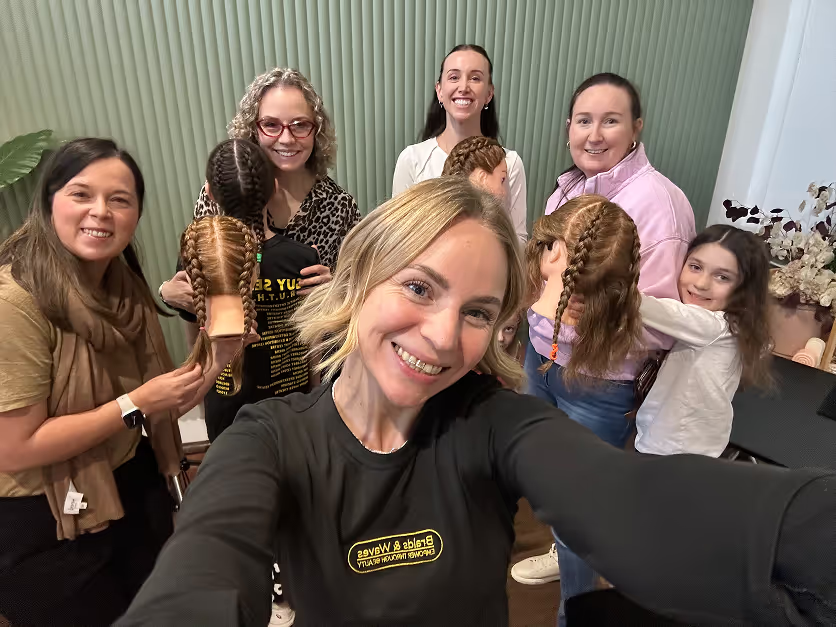
If you want to understand braiding properly - not just copy movements - a structured approach makes all the difference. The Braids & Waves Community is designed specifically for parents and breaks everything down step by step so you can braid confidently at home, without stress or guesswork.
What we do
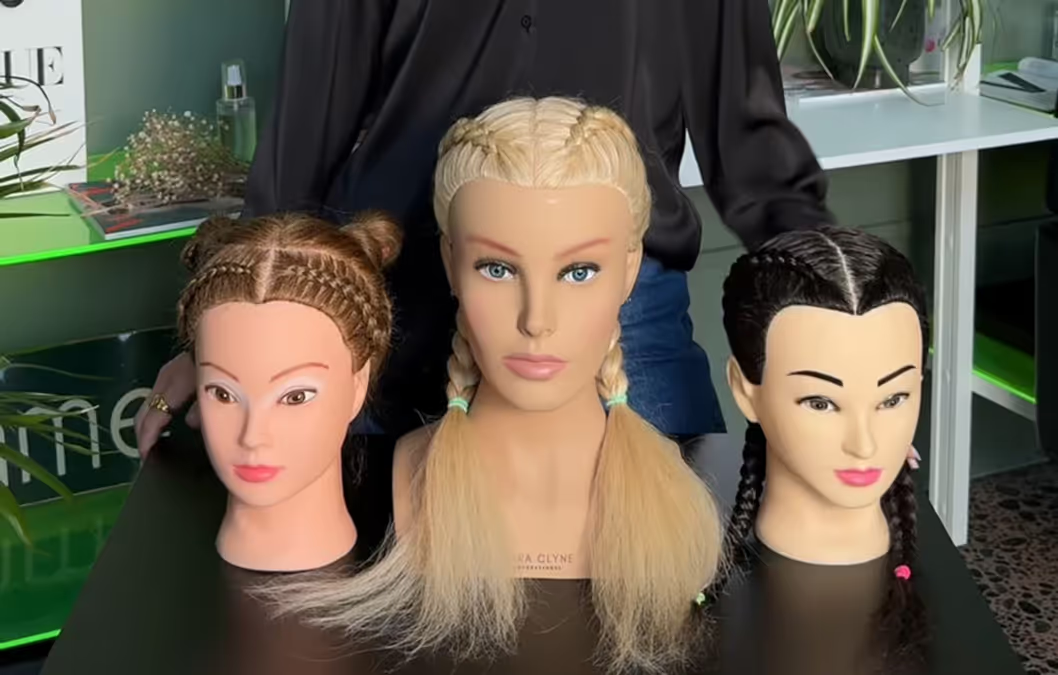
From world-class braiding services to workshops and online courses that build confidence.